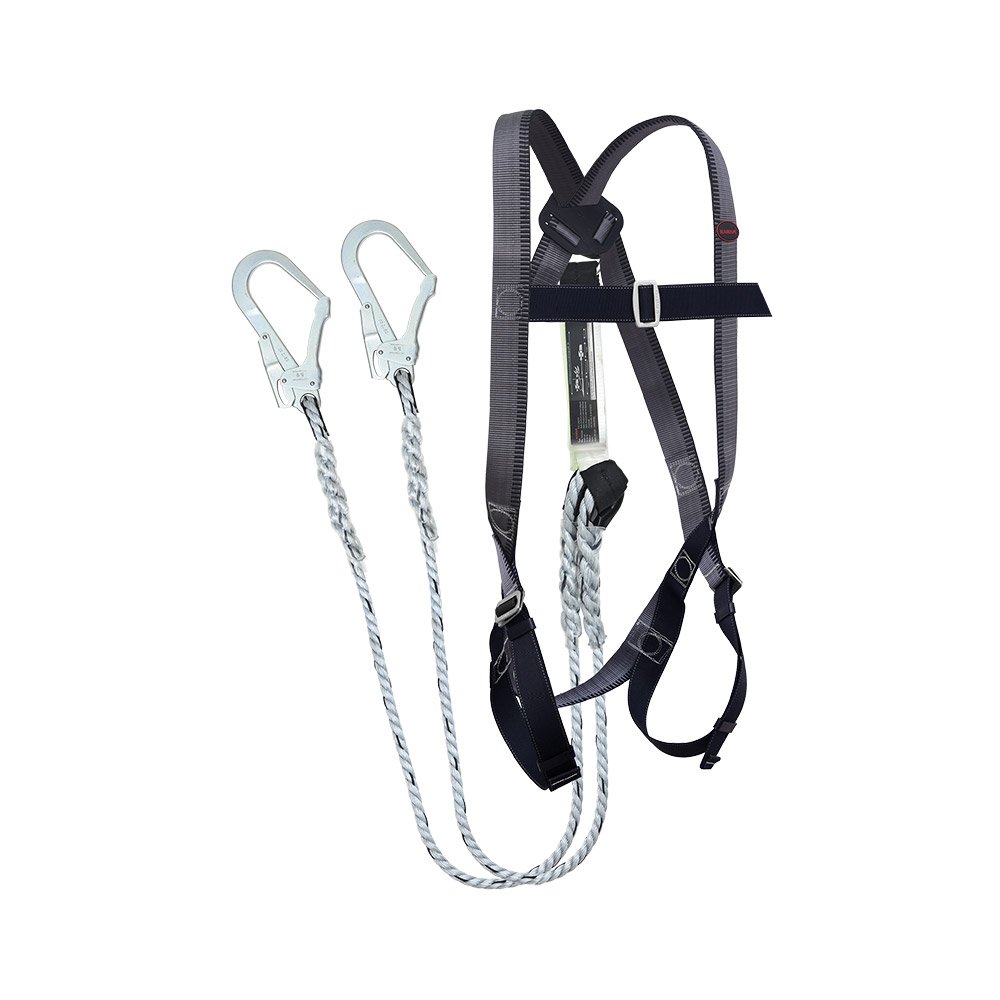
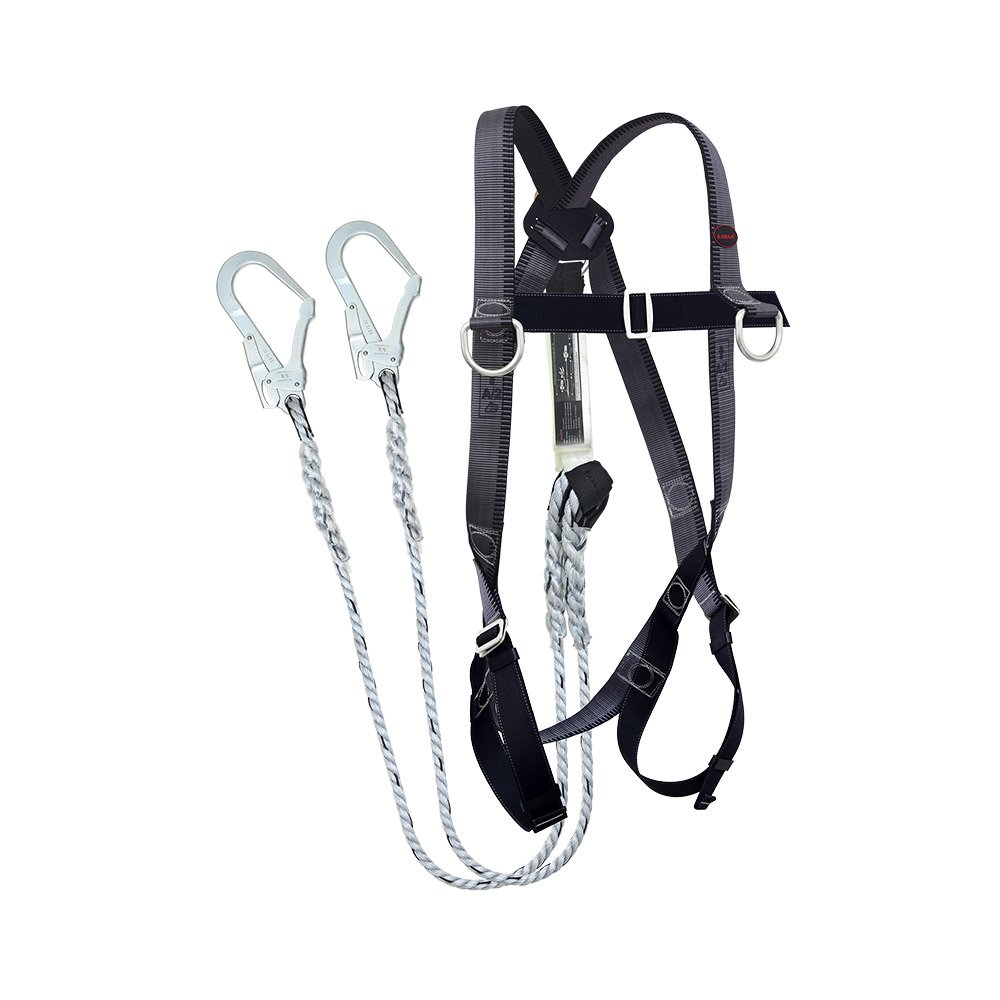
Authorized Distributor, Dealer , Wholesaler, Supplier and Trader of Karam Brand Fall Protection Equipment in India, Telangana, Andhra Pradesh, Hyderabad. KARAM offers a comprehensive range of Fall Protection equipment like full body harnesses, hooks and connectors, lanyards, retractable fall arrestor blocks, anchorages, fixed line systems, etc., to suit a vast range of applications and situations.
Types of Safety Harness
- Full-body harnesses: These harnesses are the most common type and provide protection for the entire body.
- Chest harnesses: These harnesses provide protection for the chest and upper body.
- Positioning harnesses: These harnesses are used to position workers in a safe working position.
- Retrieval harnesses: These harnesses are used to rescue workers who have fallen.
Karam Harness and Accessories: Keep You Safe and Secure : Full Body Safety Harness Class L, Class A , Class D ,Class P. Karam is a company that specializes in the production of PPE. People who work in the construction industry work at a great height and they are very prone to injuries. To ensure safety from fatal accidents safety harness is very important. The Karam safety harness offers a high level of protection to industrial workers from injuries and fatal accidents. These harnesses help in protecting individuals from injuries or shocks. Karam is working to create a lasting impact on the lives of industrial workers while working in different industries. A high level of safety within factory premises plays a major role in enhancing the efficiency and responsiveness of workers. Therefore, Karam provides the best safety harness and other accessories.
Advantages of Karam Safety Harness
Adjustable – Most of the Karam harness and accessories are adjustable. These are equipped with adjustable shoulder and thigh straps which makes it easy to wear and can be adjusted as per your convenience. Due to this, it helps the worker in positioning himself so that he can work with both hands-frees.
Convenient – These harnesses are very convenient to wear. The shoulder and thigh-straps are differentiated by a dual color scheme which makes it more convenient.
Ergonomic – The design of these harnesses are ergonomic and are ideally positioned sit-strap for extended comfort. The safety harness is safety equipment designed to protect the person from falling accidents. It is the form of attachment between a stationary and non-stationary object. It is fabricated from rope, cable or webbing and locking system. Usually, the safety harness is combined with shock absorber. It is used to regulate deceleration when the end of the rope is reached.
Factors to consider while choosing Harness:
Size and weight – Usually the maximum load the safety harness can bear is up to 300 lbs. of total capacity. In case the total weight of worker along with the tools exceed the 300 lbs then you need to choose the heavyweight safety harness.
Usage frequency and comfort level – Based on your frequency of using the harness you can select the suitable safety harness. If you are using on harness for very few times, then the basic harness too can work. In case you are planning to work over the fall arrest regularly then there is premium harness range in the market. These harnesses are ideal for various applications that include fall arrest, work positioning, rescue and rope access.
Specialized form of harness – There is a special harness for a welding process that can withstand extreme heat condition. You can take the advice of experts while selecting the right type of harness for the required industry type. Body harnesses are safety devices that support the wearer in the event of a fall from an aerial worksite. They are also used to support a worker while doing suspended work. They are a common type of personal protective equipment (PPE), and are also called safety harnesses, fall protection systems, and fall arrest systems.
Operation
Body harnesses work by stopping the descent of an individual that falls from an elevated position. As a general rule, a body harness should be used anytime a working height of six feet or more is needed. A full-body harness with a shock-absorbing lanyard or a retractable lifeline is the only product recommended. A full-body harness distributes the descent shock forces throughout the body, and the shock-absorbing lanyard regulates deceleration and arresting forces. Body harnesses allow a worker to keep his or her hands free to work. The harnesses are usually made from rope, cable, or webbing and consist of locking hardware. The hardware consists of snaps, latches or keeper, keeper spring, keeper rocks, and thimbles.
CLASSIFICATION
This standard covers the following types of belts and harnesses. All full body harnesses shall be classified as Class. A – Fall Arresting.
Class A – Fall Arresting
Class A harnesses are designed to support the body during and after the arrest of a fall. Class A harnesses shall have one D-ring for fall arrest attachment affixed to both shoulder straps at the back or at the front. Optionally, full body harnesses could be classified under one or more classes.
The identifications of these classes are:
Class D – Controlled descent
Class E – Confined entry and exit (raising and lowering)
Class L – Ladder climbing (frontal attachment)
Class P – Work positioning
Class D – Controlled Descent
Class D harnesses are those which meet the requirements for Class A harnesses and which are also designed for controlled descent from a height. Class D harnesses shall have front- or side-mounted D-rings, but they shall not be mounted at waist level.
Class E – Vertical Entry and Exit
Class E harnesses are those which meet the requirements for Class A harnesses and which are also designed to support the user during entry into and exit from confined spaces, usually involving the lowering and raising of the user. Class E harnesses shall have a sliding D-ring on each shoulder strap.
Class L – Ladder Climbing
Class L harnesses are those which meet the requirements for Class A harnesses and which are designed for use with a fall arrest system mounted on or adjacent to ladders or towers. Class L harnesses shall have one or two D-rings attached to the front of the harness.
Class P – Work Positioning
Class P harnesses are those which meet the requirements for Class A harnesses and which are designed to position the user during a work operation. Class P harnesses shall have D-rings mounted at waist level.
- HARNESSES & BELTS
- HOOKS & CONNECTORS
- LANYARDS
- ANCHORAGES
- TEMPORARY ANCHORAGE LINE SYSTEM
- RETRACTABLE FALL ARREST BLOCK
- CONFINED SPACE ENTRY
- ROPE ACCESS & RESCUE
- FIXED LINE SYSTEM
- FALL PROTECTION KIT
- LOAD ARRESTERS
- MATERIAL HAULING SYSTEM
Fall Protection Equipment:
1.Class A, L, P, D, E Full body Safety Harness with Double Scaffolding Hooks
2.Nylon Double Lanyard, Double Scaffolding Hook With Energy Absorber
Fall Protection Equipment, Fall Protection Harness, Full Body Harnesses, Climbing Safety Harness, Safety Harnesses, Construction safety harness, industrial safety harness, rope safety harness, safety harness, fall protection.
There are four classes of fall protection systems
Class 1
Body belts (single or double D-ring), designed to restrain a person in a hazardous work position, prevent a fall, or arrest it completely within 3 feet (OSHA).
Class 2
Chest harnesses, used only with limited fall hazards (including no vertical free fall), or for retrieving persons, as from a tank or bin.
Class 3
Full body harnesses, designed to arrest the most severe free falls.
Class 4
Suspension belts, independent supports used to suspend a worker, such as boatswain’s chairs or raising or lowering harnesses
Safety Harness Applications:
- Roofing
- Window washing
- Construction work
- Crane operators
- Bridge painting
- Rock climbing
- Sailing
- Scaffold work
Safety Harness – Fall Protection Harness for Works at Height FAQs:
1. What is a safety harness?
A safety harness is a personal protective equipment (PPE) used to protect workers from falls while working at height. It distributes fall impact across the body to minimize injury and ensure safety.
2. Why is a safety harness important for working at height in India?
Falls from height are a major cause of workplace accidents in India. A certified safety harness ensures compliance with IS, EN, and ANSI safety standards and provides essential protection for workers in construction, industrial, telecom, electrical and maintenance sectors.
3. Who must use fall protection systems in India?
Any worker performing tasks above 2 meters (as per Indian safety guidelines) must use a fall protection system, including a full body safety harness and anchorage.
4. What standards should a safety harness comply with in India?
Use harnesses certified to:
IS 3521,
EN 361,
ANSI Z359,
or equivalent international standards.
5. What are the main components of a fall protection system?
A complete system includes:
Full Body Safety Harness
Energy Absorbing Lanyard
Fall Arrestor / Lifeline
Anchor Point
Connectors (Karabiners, Hooks)
6. How do I select the right safety harness?
Choose based on:
Type of work (construction, tower climbing, rescue, maintenance)
Required attachment points (D-rings)
Comfort and adjustability
Weight capacity
Certification
Durability and brand reliability
7. How often should a safety harness be inspected?
Before each use (daily pre-inspection)
Periodic inspection by a trained and competent person
Follow manufacturer recommendations.
8. What is the lifespan of a safety harness in India?
Most safety harnesses have a lifespan of 5 years from the date of manufacture, depending on usage and environmental conditions. Replace immediately if damaged or after a fall.
9. Can a safety harness be reused after a fall incident?
No. Any harness that has arrested a fall must be removed from service and replaced to ensure safety.
10. What is an energy absorber and why is it needed?
An energy absorber reduces the shock load during a fall, protecting the worker by controlling the fall arrest force within safe limits.
11. How should a safety harness fit correctly?
It should fit snugly with properly adjusted shoulder straps, chest strap, and leg straps. The dorsal D-ring should sit between the shoulder blades for correct fall arrest positioning.
12. How should safety harnesses be stored in Indian conditions?
Store in a cool, dry place away from sunlight, moisture, oil, chemicals, heat, and sharp objects. Avoid damp or extremely hot environments.
13. Are there different types of safety harnesses available in India?
Yes. Common types include:
Full Body Harness
Construction Harness
Tower Climbing Harness
Rope Access & Rescue Harness
Work Positioning Harness
14. Can a safety harness be cleaned?
Yes. Clean using mild soap and water. Avoid chemicals, bleach, or abrasive cleaners that may damage the webbing.
15. Do you supply safety harnesses and fall protection equipment across India?
Yes. We supply certified safety harnesses, energy-absorbing lanyards, lifelines, fall arrest systems, and height safety solutions across India for construction, industrial, telecom, electrical, and infrastructure sectors.